About Zuni CRC
-
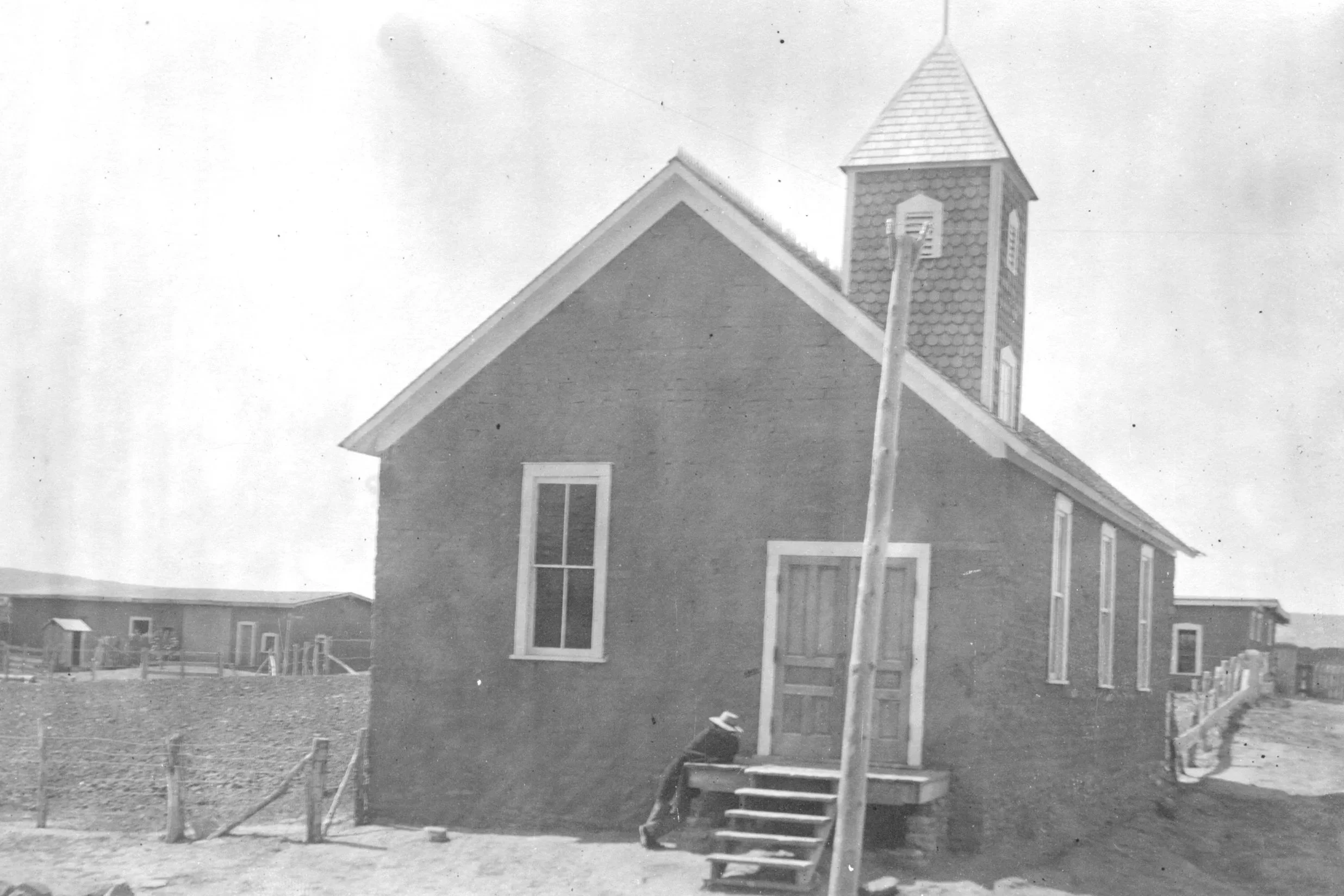
The ministry of Zuni Christian Reformed Church rests on the shoulders of those who have gone before us. The Christian Reformed denomination began mission work in Zuni in 1897 when Andrew and Effa VanderWagen established a presence in the village, taking up the work begun earlier by the Presbyterian Church (1877-1896). Despite initial challenges, the VanderWagens persevered. They purchased the present mission site (now under a lease from the Zuni Tribal Government) and in 1904-1905 built a small adobe chapel.
In 1908, a small school was established for four Zuni children and two children of the resident missionary. By 1913, the school was a well-established feature of the mission with 35 Zuni children in attendance. It continues to the present as a ministry partner of Zuni Christian Reformed Church. Together, church and school make up the Zuni Christian Reformed Mission.
Across the years, many have served as pastors, evangelists, teachers and others. We acknowledge God’s faithfulness as we name the pastors and evangelists who have served our church. Each person’s story contributes to the history of the present ministry.
Pastors
Herman Fryling 1906-1926
C. Hayenga 1926-1931
J.W. Brink 1931-1938
George Yff 1938-1944
Cornelius Kuiper 1944-1954
Ben Haven 1954-1961
Roger Posthuma 1965-1967 and 1973-1985
Don Klompien 1970-1973
Interim Pastors: 1985-1988
William VanderHoven
Earl Marlink
William RibbensMichael Meekhof 1989-2018
Bruce Persenaire 2019-2021
James Zwier 2022-present
Evangelists/Commissioned/Associate Pastors
Louis Momy. Early mission years
Rex Natewa 1940-1965
Rex Chimoni 1966-1978 and 1982-199x
Tim Eisenga 2014-present
Barlow Gasper 2019-present
(Youth Pastor) -
For many years, Zuni Christian Reformed Church was a mission outreach of the Christian Reformed denomination under the direction of its mission agencies. In 1987, the church was organized as a Christian Reformed Church and became responsible for its own governance. However, it was not until 2008 that the ZCRC gained full independence from Christian Reformed Home Missions.
Now self-governing and independent, the church is led by a Council consisting of the pastor, two elders and four deacons. The church has three staff positions: pastor, discipleship (community outreach) minister and part time youth pastor. Along with independence and self-governance, we have responsibility for meeting our own financial needs. Today, 70% of our financial resources come from the congregation and 30% come from outside gifts.
-
Zuni Christian Reformed Church shares the mission facility with Zuni Christian Mission School. It is located on a 1.7 acre plot of land near the center of the town, leased from the Zuni Tribe. The year 2018 marked the completion of a 10-year project in which the entire campus was rebuilt. New buildings replaced old deteriorated structures and the ‘temporary’ modular homes and classrooms that had been used since the 1971 fire. Each step of the way, God affirmed his goodness to us through the generosity of his people. The new debt-free campus stands as a testimony to the Zuni people that God holds them dear and his love will pursue them into the future.
Completed School building 2012
Staff duplexes and playground 2015
Gym/Ministry Center 2017
Parsonage & triplex 2018 -
The Zuni Pueblo is a small town of about 11,000 people located on the Zuni Reservation 40 miles south of Gallup in northwestern New Mexico. Except for a small population of non-natives who work in various service capacities, residents are Zuni Tribal members. Zuni Tribal Government is responsible for public services such as roads and utilities, land management, including social, safety and legal services. Zuni religious leaders preside over traditional religious practices. Zuni Public Schools provide pre-K through high school education. Saint Anthony Catholic Mission includes a pre-K to 8th grade school and a church. Indian Health Services provides health care for Native Americans. A variety of small businesses supply basic goods and services. Many of the people make traditional arts, crafts, and jewelry in their homes.
-
Congregation
Average Sunday attendance: 70
Adults: 50
Young people: 10
Children: 10
Active professing members: 130 (59 families)Budget
$185,000/year, 70% from local offerings.
Fundraising goals: $20,000 from church partnerships and $30,000 from individuals
Things We Want People to Know
-
1. ZCRC is a cross-cultural ministry. Zuni culture is unique, rich and for those who are not Zuni, intriguing and perplexing. Though Zuni Pueblo is in many respects a modern American community with roots that can be traced back to pre-Spanish times, it remains a tightly-knit ethnic community of people who speak their own language, govern themselves and their land as a sovereign nation, have their own cultural values and practice their own traditional religion.
The cross-cultural context of our church both enriches and challenges our ministry. Along with cultural and religious challenges, complex social and economic problems impact the health and well-being of the whole community. Whether directly or indirectly, alcoholism or drug abuse affects everyone who lives in the Pueblo. As a church, we embrace the challenge of being salt and light to broken and hurting people in our community. We point to Jesus as we often help in very practical ways.
-
2. ZCRC is part of the Zuni Christian Reformed Mission and serves in partnership with Zuni Christian Mission School [ZCMS]. While the church and school have separate governing bodies, leadership and staff, together they serve the people of the Zuni Pueblo as a unified holistic ministry. The church and school have a common vision and work side by side in the shared facility. Practices and policies are in place to facilitate a smooth working relationship between church and school.
-
3. The programs of ZCRC are the corporate expression of our thankfulness to God. These include:
Worship services;
Bible study and prayer groups;
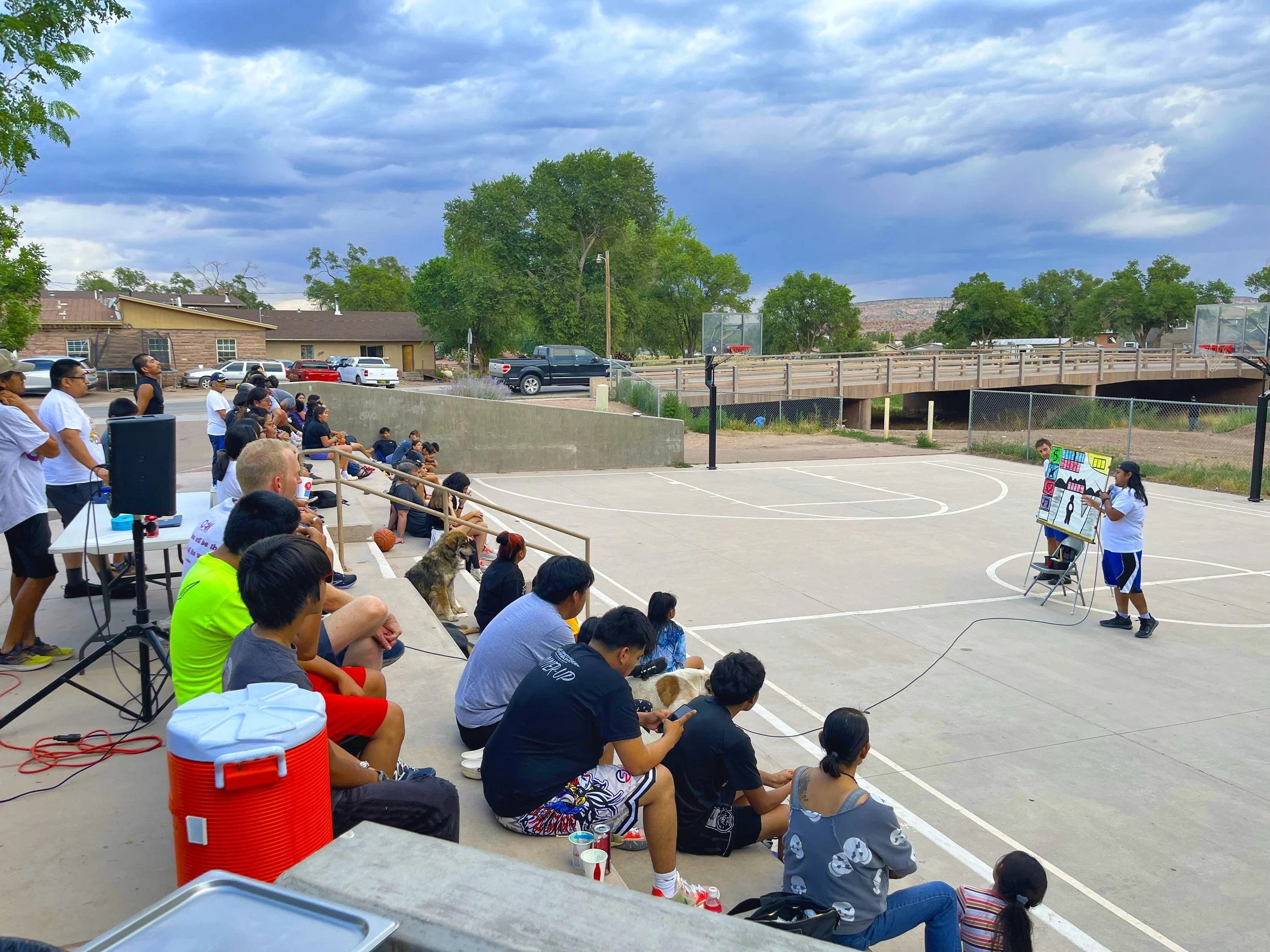
Children and youth programs;
Counseling and discipleship mentoring;
Support groups, specifically through Celebrate Recovery;
Benevolence.
Evangelism is at the heart of the Zuni Christian Reformed Mission and Church. As the body of Christ in Zuni, we are called to be witnesses to the Gospel in every relationship whether that relationship grows in the context of a church program, the mission school or in our everyday lives in our families, neighborhoods and work places. Trust opens the way for non-Christians to consider the truths of the Bible.
It is our goal to be a ministering church—through our programs, yes; but most importantly, through our relationships. We desire to be a discipling church, raising future leaders from within. -
4. The ZCRC congregation is diverse. While enjoying our diversity, we come together in unity through our Lord Jesus Christ. Ethnically, the majority of our church family is comprised of indigenous Zuni and Navajo peoples. We also have members and attendees of European, Asian, and African descent. Most church members and Zuni Christian Mission staff reside on Zuni pueblo lands. Other members and attendees come from communities adjacent to the Zuni Indian Reservation.
The church family is diverse in other ways. There are a variety of educational backgrounds and income levels. We have artisans making jewelry and pottery, Public Health Service employees, public school and mission educators, tribal government employees, and retirees within the church family. Within this mixture of people, a range of denominational backgrounds can also be found. Our ages range from birth to senior adults. The blessings of young families with youthful children and a strong youth group are a source of hope for the church’s future.On a deeper level, we are also diverse in terms of where we are on our Christian walk. In worship services and church or school functions, there are more mature Christians, young Christians, and seekers who are new to the faith or just curious about what happens at church. Some within the church family stand as the only Jesus-follower within their biological families. Others come from covenant families where acceptance of Jesus as Savior has been taught from generation to generation. Together, we look to Jesus the Messiah as the foundation of life.
The ZCRC reflects a diversity of difficulties and redemption stories. Intergenerational trauma is common and manifests itself through alcoholism, drug abuse, and domestic violence. These are interwoven into our church members’ extended families. However, remarkable stories of redemption, freedom, and recovery grow out of encounters with the risen Lord. Certainly, church members still struggle with hurts, habits, and hangups, and instances of failure in their battle may cause shame and separation from the church body from shorter to longer episodes. Therefore, the restorative nature of the ZCRC ministry cannot be overstated.
The encounter with Christ creates an internal struggle in any seeker that is cognitive, emotional, and spiritual. Because the majority of the Zuni population follows the beliefs of their ancestors, this dissonance manifests itself uniquely in Zuni and involves family members and friends.
The ZCRC is a hospitable group of people, which is exemplified when addressing the difficulties and problems we face. The church aspires to be the hands and feet of Christ instead of thinking of these ministries as reserved for only the pastor, the church council, and the school staff. So there are men and women’s prayer meetings, Celebrate Recovery groups, and the beginnings of an outreach to men. These relationships and programs are representative of our efforts to become the church ministering.
-
5. ZCRC is grounded in the knowledge that God is at work in our lives and in our community. There are times when God’s goodness and grace washes over us obviously and tangibly; then worship soars and hope flourishes. But there are also times of crushing discouragement that dashes hope and leaves us heart-broken. Each circumstance invites us to explore God’s work in our lives and in this place. We acknowledge how graciously and patiently He shapes our hearts to embrace his purposes. Our lives of faith call us to be awake and attentive to the love-prompted mighty acts of God.